Georgetown Elite Concrete carries out concrete resurfacing in Georgetown, TX, with more than twenty years of concrete behind us across Williamson County and work in surrounding cities including Serenada, Santa Rita Ranch, Round Rock, Brushy Creek and Jarrell. Resurfacing puts a new wearing surface onto concrete you already own, which makes it the least expensive way to transform a tired slab and the easiest way to waste money on a slab that was never a candidate.
Everything turns on one question: is there enough sound concrete left to bond to. An overlay is only ever as good as its attachment to what is underneath, so a resurfacing quote that does not begin with an assessment of the existing slab is a quote for a finish rather than for a floor. We sound the slab, test the surface and look at why it deteriorated before proposing anything.
That assessment is also where we tell people no. A slab cracked through its depth, delaminating, or moving on ground that has not been dealt with will telegraph every one of those problems through a new surface within a season, and the honest answer there is replacement or repair first, not a thinner version of the same disappointment.
Deciding Whether a Slab Can Be Resurfaced
Sounding the Slab and Finding Delamination
Tapping across a surface tells you where the top layer has separated from the concrete below, which is invisible from above and fatal to an overlay. Delaminated areas have to be removed back to sound material rather than covered, because an overlay bonded to a loose layer fails with that layer. We map those areas before quoting so the preparation is priced rather than discovered mid-job.
Contamination, Sealers and Old Coatings
Concrete that has been sealed, coated, or treated with a curing compound or release agent will not accept a bonded overlay until that material is gone. The same applies to oil in a garage floor and to adhesive residue indoors. We test the surface for absorption rather than assuming it is clean, since a bond failure caused by contamination looks exactly like a product failure and costs the same to put right.
Cracks That Will Come Through Anyway
A crack that is still moving will reappear in a new surface, and no overlay thickness available at sensible cost prevents that. The distinction is between a dormant crack, which can be treated and bridged, and a live one, which is reporting a problem underneath. We work out which you have first, because covering a live crack simply relocates the disappointment to a new surface.
Profile, Preparation and Mechanical Bond
An overlay grips because the surface has been given profile, usually by grinding or shot blasting, rather than because of anything in the mix. Preparation is the majority of the labor on a resurfacing job and it is the part most easily skimped. We prepare to the profile the system specifies rather than to what a quick pass achieves, since this is the single decision the finished result depends on.
Resurfacing Systems and What Each One Does
Thin Bonded Overlays and Skim Coats
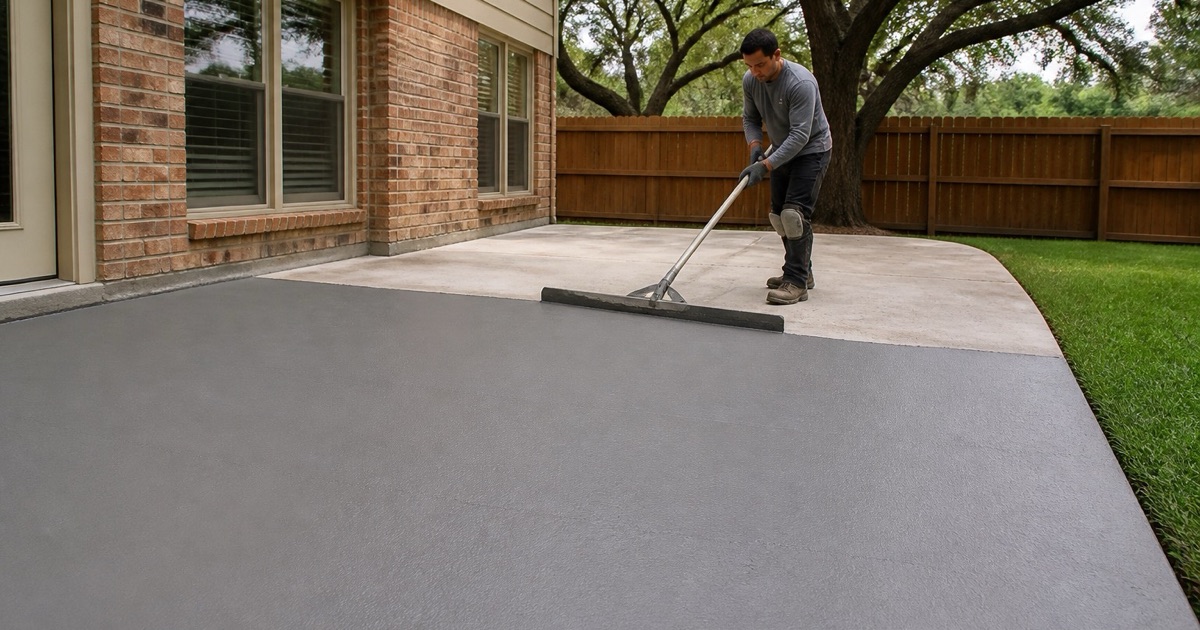
A thin cementitious overlay renews the wearing surface and evens out minor imperfections without changing levels appreciably, which matters where a slab meets a threshold or a door. It is the workhorse for a tired but sound driveway, walk or patio. It will not correct a slab that is out of level, and we say which of those two problems you actually have.
Stamped and Stencil Coating Overlays
Where the goal is appearance, an overlay can carry a pattern by stencil or by texture, giving a decorative finish on existing concrete without demolition. That is also the route that works within covenants prohibiting a genuine stamp, and inside Sun City a color coating in a color from the association’s approved list, carrying a stenciled pattern or simulated grout lines, is what the guidelines actually permit.
Micro Toppings and Fine Finishes
A micro topping is a very thin, fine-grained finish used where a smooth, contemporary surface is wanted and levels cannot move at all. It is unforgiving of a poorly prepared substrate, because there is no thickness in which to hide anything, so it belongs on sound, flat, clean concrete. We are candid about which slabs are ready for one and which need work first.
Self Leveling Underlayment for Interior Floors
Indoors the problem is usually a floor out of plane rather than a worn surface, and a self leveling underlayment poured over a prepared, primed slab gives the flat plane that tile, vinyl or a coating needs. It is a leveling product rather than a wearing surface, so it goes under a finish rather than being one, and confusing the two is a common and expensive mistake.
Cost, Life and Honest Comparisons
Resurfacing Against Replacement
Resurfacing costs a fraction of removal and replacement and takes a fraction of the time, which is exactly why it gets chosen for slabs that should have been replaced. The fair comparison is over ten years rather than on the invoice: an overlay on sound concrete is excellent value, and one on a failing slab is money spent on the way to spending it again. We quote both.
What Determines How Long It Lasts
The life of a resurfaced slab is set by the bond, the preparation and whether the original cause of deterioration was addressed, far more than by the product. Traffic, ultraviolet exposure and maintenance then do the rest. Where a decorative overlay carries a sealer, that sealer is a wearing layer and part of a maintenance schedule rather than a permanent feature.
Getting the Surface Back
Most resurfacing jobs are quicker to complete than a new pour and slower to return to service than clients expect, because cure and, for decorative systems, sealing both take their own time. We give a date for foot traffic and a separate date for vehicles or furniture, and we plan the sequence so a household or a business is not without the surface longer than necessary.
- 20+ Years in Georgetown
- Permits Pulled & Inspections Booked
- Free Written Estimates