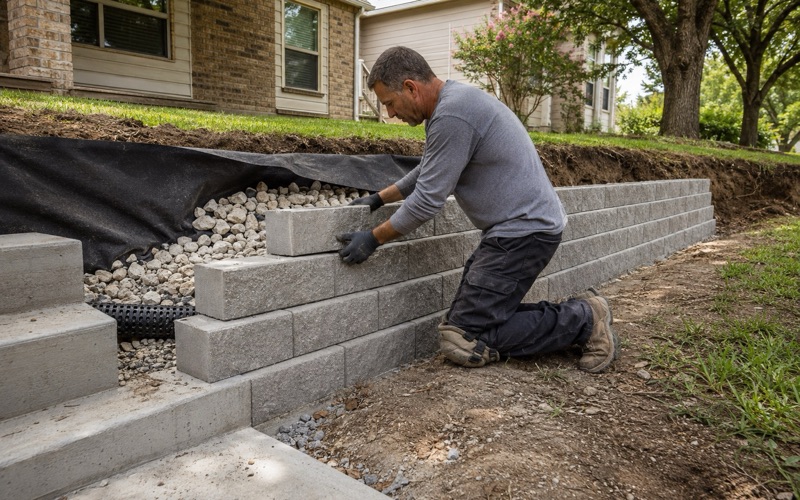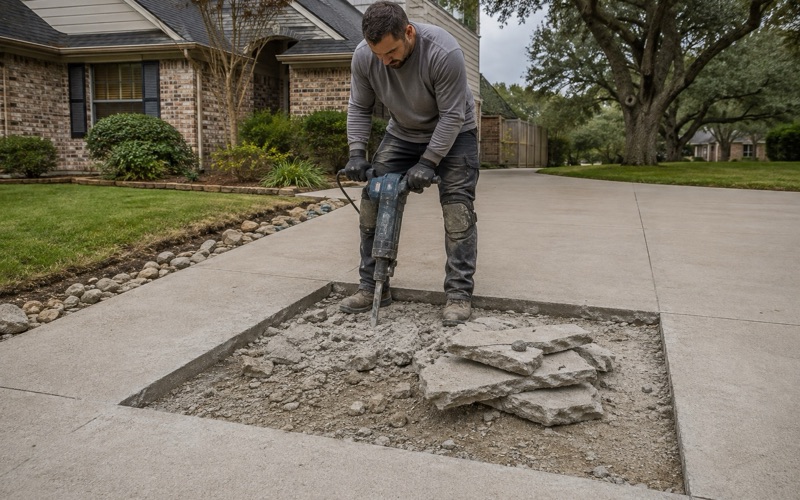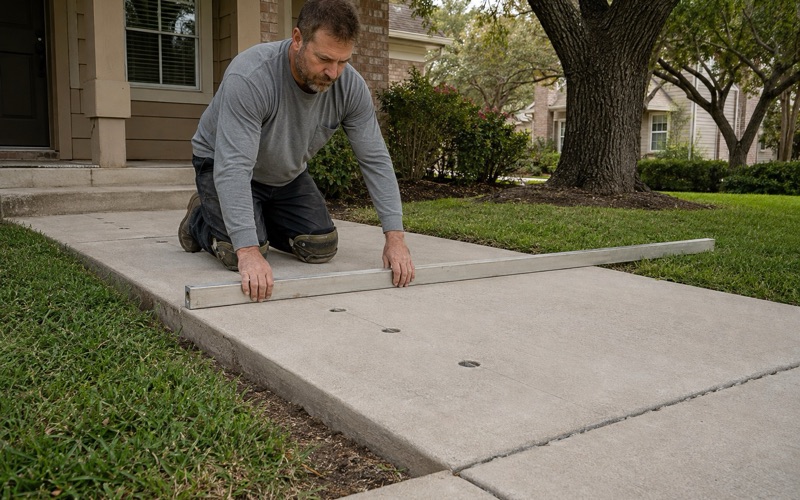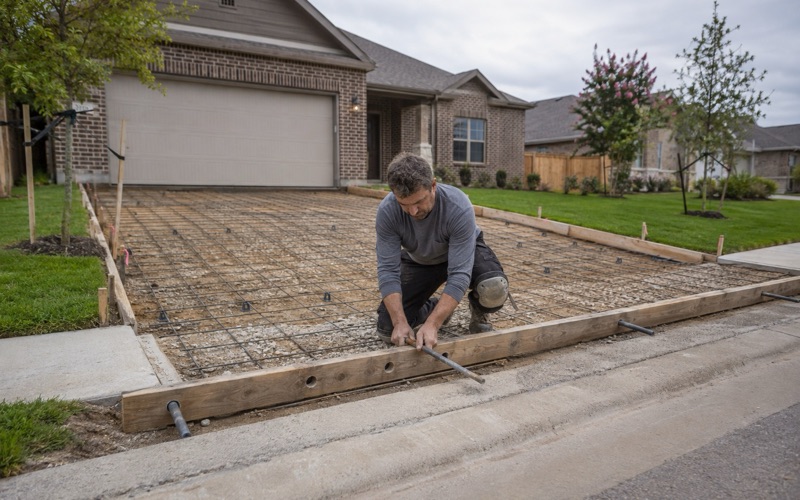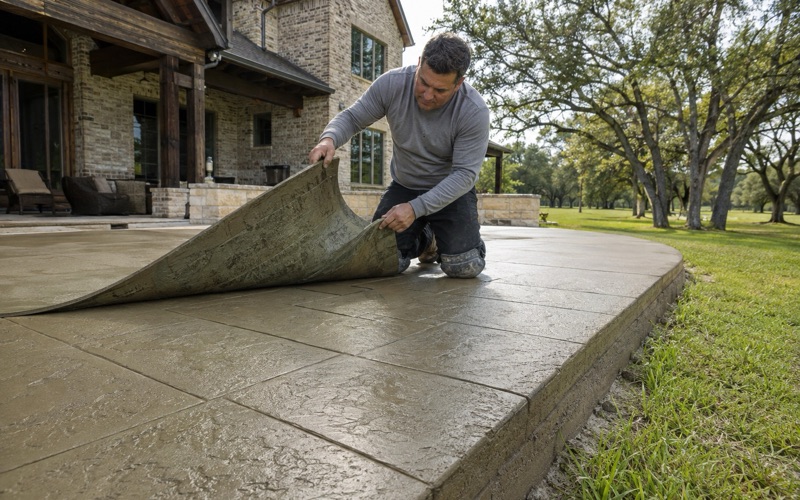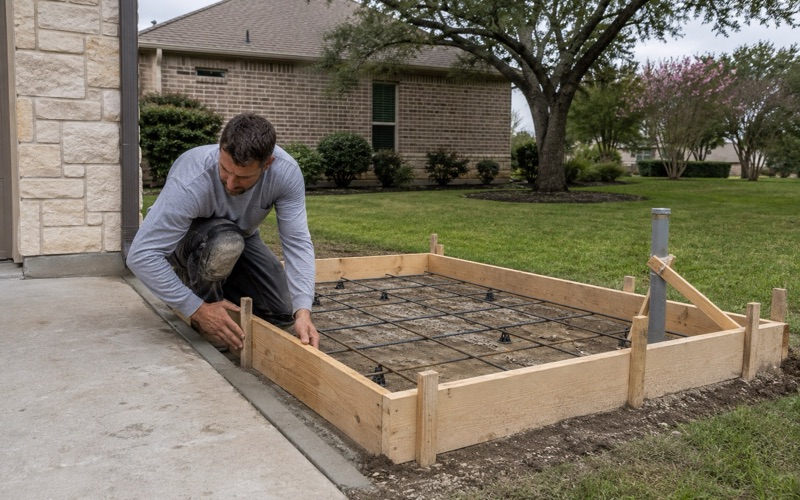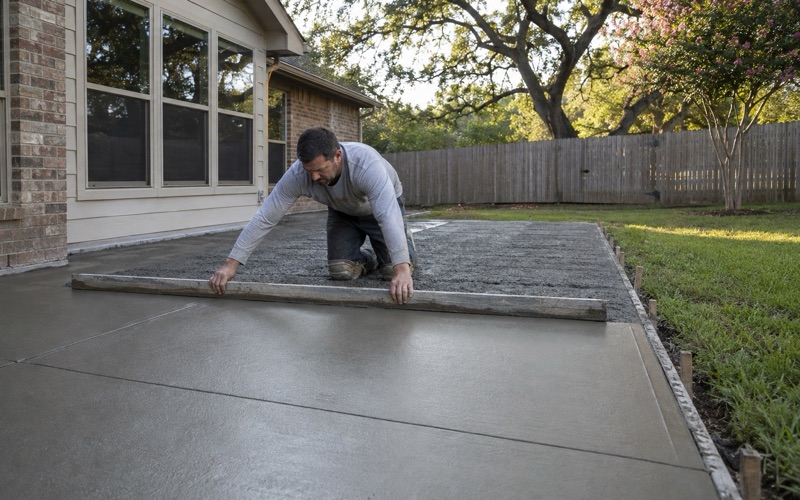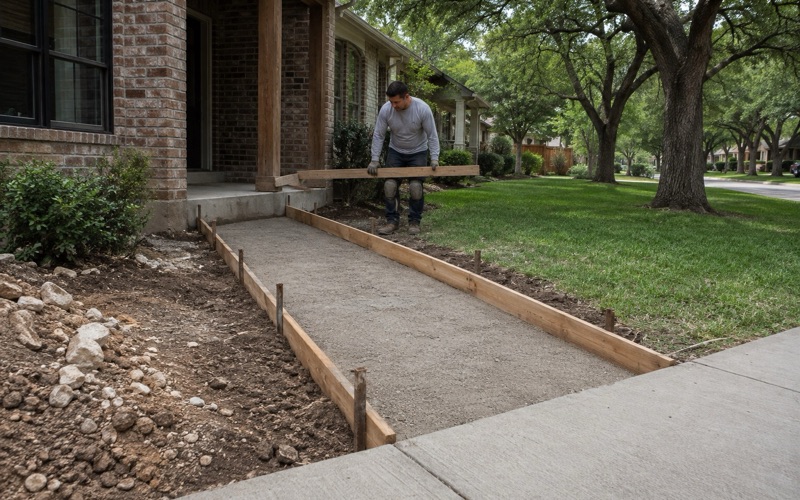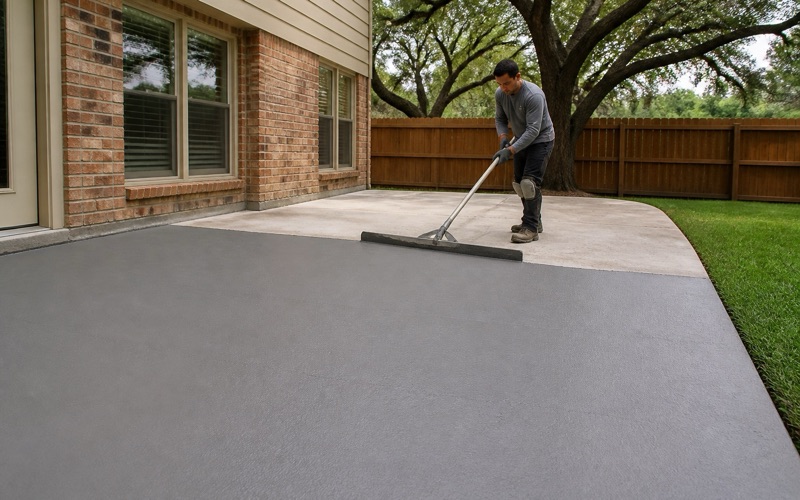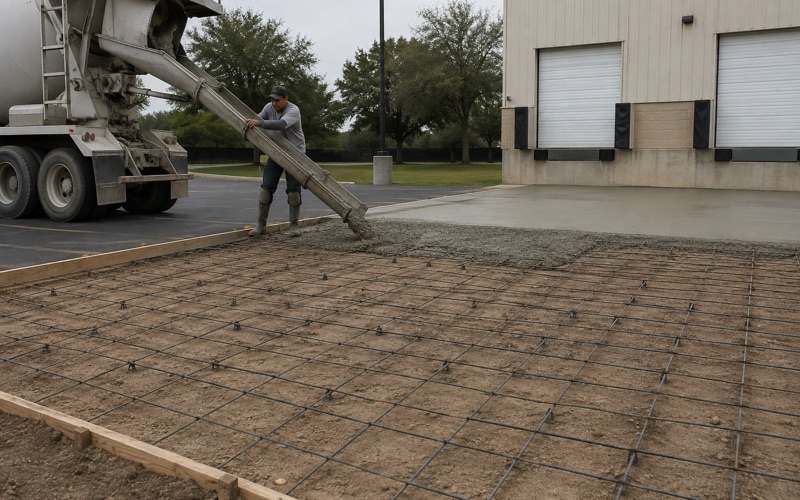
Georgetown Elite Concrete works as a concrete contractor in Wells Branch, placing driveways, slabs, patios and walks and repairing, leveling and resurfacing the concrete already down. Twenty years and more of concrete across this region sits behind the work, and the same people who assess the ground are the ones who pour on it.
The unusual thing about quoting concrete here is how little of it can be generalized. Five soil point queries inside a CDP of about two and a half square miles, taken against the Travis County survey area TX453, return four different map units, and the representative plasticity index across them runs from 16 to 36 while depth to refusal runs from 20 centimeters to 97, roughly 8 inches to 38 inches.
That range is wider than many whole towns manage, inside a place you can drive across in five minutes. It means subgrade preparation, excavation cost and the way water behaves under a slab are lot-by-lot answers rather than neighborhood ones, and it is why we look at a specific property before putting a number against it.
Wells Branch Does Not Have One Subgrade
Four Map Units Inside Two and a Half Square Miles
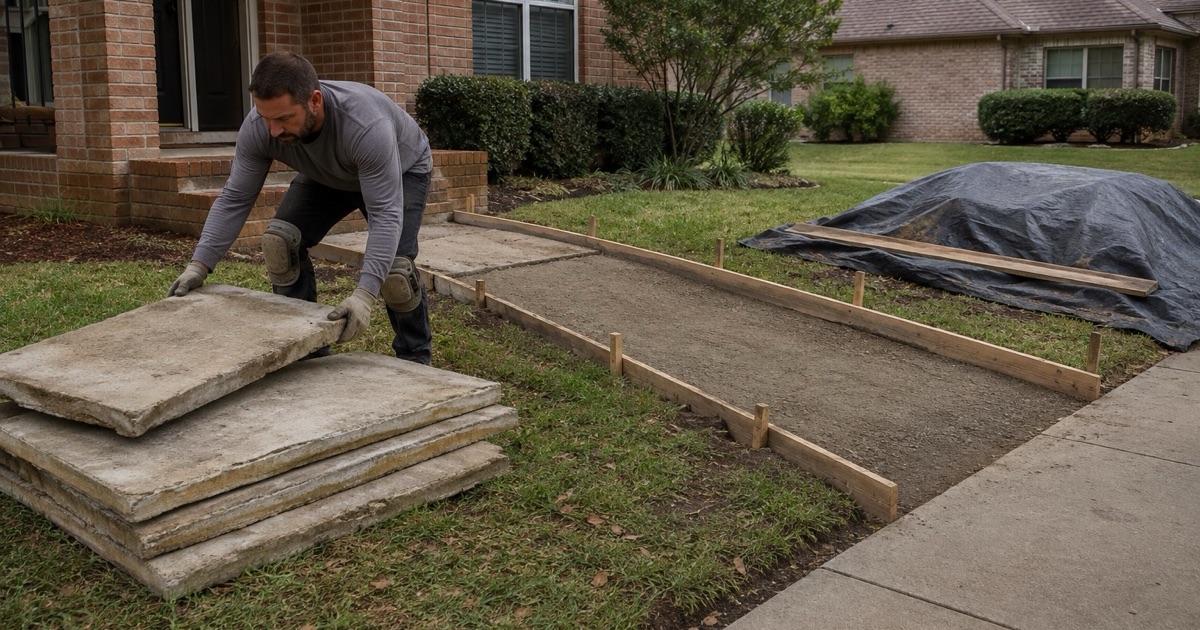
The five sampled points return Eddy gravelly loam at the northeast and southeast, San Saba clay at the northwest, Austin silty clay at the center and Eckrant very stony clay at the southwest. Four map units across that small an area is genuinely unusual, and it is the single most useful fact about building concrete here.
The practical consequence is that experience gained on one job transfers only partly to the next one. A crew that learned this ground on the northeast side and assumed it applied at the northwest would be working from a soil with roughly seven times the linear extensibility and nearly five times the depth to refusal.
Plasticity Index and Linear Extensibility Are Two Different Readings
These two numbers get treated as one and they are not. Plasticity index describes how the material behaves as its moisture changes, while linear extensibility describes how much it actually moves. Quoting either on its own misdescribes the soil, and around here that error runs in both directions.
Eckrant at the southwest carries a representative plasticity index of 34 with linear extensibility of only 3.1 to 4.4 percent, which reads as alarming on the first number and inert on the second. Read together they describe rigid bearing on shallow rock rather than a deep heave problem, and that is a different slab to design.
Why a Rule of Thumb From the Next Street Fails
A soil map is a survey product at a survey scale, so it tells you what is likely across an area rather than what sits under one particular driveway. We use it to know which questions to ask and what to expect, not to declare what any given lot contains.
That distinction matters for the client too. Anyone offering a firm subgrade specification for a Wells Branch property without having been on it is describing a map rather than a lot, and on ground this variable that is a guess dressed up as a measurement.
Looking for concrete-contractor closer to Pflugerville? See Concrete-Contractor Services in Pflugerville.
The Soils Mapped Across the Place
Eddy Gravelly Loam, Northeast and Southeast
Eddy is not an expansive soil, and on this ground that is the exception rather than the rule. It carries a representative plasticity index of 16, clay of 26 to 32 percent, and linear extensibility of only 1.5 percent, over weakly coherent paralithic bedrock at a representative 36 centimeters, about 14 inches, with 60 percent calcium carbonate through the profile.
So the problem to design for on those quadrants is bearing and excavation rather than seasonal movement. Its saturated hydraulic conductivity of 9 micrometers per second means water leaves quickly, which is helpful under a slab and much less helpful when you need a subgrade to hold moisture while concrete cures.
San Saba Clay at the Northwest
The northwest corner is the one quadrant where shrink-swell genuinely governs. San Saba is a Vertisol carrying a representative plasticity index of 36, clay of 50 percent, and linear extensibility of 9.8 to 10.2 percent, over indurated limestone at a representative 97 centimeters, about 38 inches.
It also drains slowly, at a saturated hydraulic conductivity of 0.21 micrometers per second, which is more than forty times slower than the Eddy on the other side of the place. Deep, slow and mobile is a completely different design problem from shallow, fast and stable, and moisture control during the pour matters far more here.
Austin Silty Clay Through the Center
The center returns Austin silty clay on 2 to 5 percent slopes, moderately eroded, at 85 percent Austin with 15 percent Houston Black. It runs a representative plasticity index of 28 in the plow layer, 33 in the Bw horizon and 30 in the Bk, with clay at 45 percent and linear extensibility of 4.4 to 5.1 percent over weakly coherent bedrock near 74 centimeters, about 29 inches.
The phrase moderately eroded in the map unit name is itself a statement worth reading, because it says how much topsoil has already gone. On a site like that the material a slab would bear on is not the material the profile describes at full depth, and stripping to something competent can be shallower than expected.
Rock and Slope on the Southwest Edge
Eckrant Very Stony Clay Over Indurated Limestone
The southwest corner is mapped Eckrant very stony clay on 5 to 18 percent slopes, at 90 percent Eckrant with 5 percent bare rock outcrop and 5 percent Brackett. Eckrant here carries a representative plasticity index of 34 and 50 percent clay over indurated limestone at a representative 20 centimeters, about 8 inches.
Eight inches to rock is the shallowest reading anywhere in this place, and it changes the job from digging to breaking. Where the rock outcrop component is present the bedrock sits at the surface, so bare rock becomes part of the subgrade rather than an obstruction within it.
Slope, Stone and What Excavation Actually Costs
Those are also the steepest slopes in the CDP, at 5 to 18 percent against 1 to 2 percent at the northwest. Slope changes how a slab is formed, how it drains and how much cut and fill a level surface requires, and it does all of that before the stone in the profile is taken into account.
We price excavation on that corner from what probes show rather than from an area rate. A quote that assumes clay and meets indurated limestone in the first foot has to be absorbed by somebody, and the honest time to establish it is before the contract rather than during the dig.
What the Ground Changes About the Work
Subgrade, Base Course and Moisture
Preparation follows the soil rather than a standard sequence. A shallow carbonate loam that drains fast wants moisture managed so the subgrade is not pulling water out of fresh concrete, while a deep slow clay wants its moisture condition controlled and stabilized before anything is placed on it.
Base course decisions follow the same logic. Material imported over a fast-draining gravelly loam does a different job from material placed to give a uniform bearing layer over a Vertisol, and treating those as one specification is how a slab ends up supported unevenly along its length.
Reinforcement, Jointing and Where a Slab Will Move
Reinforcement and joint layout are decided from what the ground will do, not from habit. Where movement is the dominant risk the priority is controlling where the slab relieves itself and keeping steel at its designed depth; where rigid bearing on shallow rock is the risk, the concern shifts toward uneven support and the transition between rock and softer material.
The transitions are the part worth attention. A slab that begins on one map unit and ends on another is supported two ways along its own length, and on a place with four units in two and a half square miles that is a realistic possibility on a larger lot.
Drainage, and How Differently These Soils Take Water
The hydrology here is not uniform either. Storm water in this place drains toward Wells Branch Creek, which begins here, runs into Walnut Creek and eventually reaches the Colorado River, rather than toward the systems further north.
At the lot scale the difference between a soil moving water at 9 micrometers per second and one at 0.21 decides whether a patio can shed water into adjacent ground or needs somewhere definite to send it. We set falls and discharge points from the soil rather than from the shape of the yard.
Reading a Lot Before Anyone Quotes It
The whole point of the variability is that it is knowable in advance. Probing the actual footprint establishes depth to refusal and what the bearing material is, and it takes very little time compared with the cost of guessing wrong on either.
That is also the fairest basis for a price. Where the ground is straightforward we can say so and quote accordingly, and where it is shallow, stony or slow-draining we can show what that adds rather than carrying a contingency on every job to cover the ones that turn out difficult.
Wells Branch is a census-designated place in Travis County with a population recorded at 14,000 in the 2020 census, and the median housing unit here dates from 1992. A good deal of the original flatwork is now old enough that replacement rather than repair is the honest recommendation, and the ground it goes back onto is the ground described above.
- 20+ Years in Georgetown
- Permits Pulled & Inspections Booked
- Free Written Estimates